Right to Rent myths: What October really changed

Harriet Holmes
Senior AML Enablement and Product Assurance Manager

Digital Right to Rent rules changed on 1 October 2026, but some of the biggest risks come from misunderstanding what has and hasn't changed. We tackle six of the Right to Rent myths landlords and letting agents should know.
A Right to Rent check confirms that an adult can legally rent a home in England. Done properly, it gives you a statutory excuse: your defence against a civil penalty if a tenant later turns out not to have the Right to Rent.
But everyday processes are often where assumptions creep in. And those assumptions matter. Without a statutory excuse, civil penalties can be up to £10,000 per occupier for a first breach and up to £20,000 per occupier for a repeat breach within three years.
So, how many of these Right to Rent myths have you heard?
What changed on 1st October
Two things changed for the digital route. If you choose to carry out a Digital Right to Rent check, the provider must now be a registered Right to Rent digital verification service provider (RtR DVSP). And an eligible British or Irish passport, or Irish passport card, can now be used for a digital check up to six months after it expired.
The core duties haven't changed. You still need to check every adult occupier, use the right route for each person and keep the right evidence.
Myth 1: “Digital Right to Rent checks are now mandatory”
They aren't. A Digital Right to Rent check is one of three routes, not a requirement, and you can't insist a tenant uses a particular one.
There are still different ways to establish someone's Right to Rent, depending on the person and the evidence they hold.
That can include a manual document-based check, a Home Office online check using a share code or, where eligible, a Digital Right to Rent check through a registered RtR DVSP.
What changed on 1st October is the digital route.
If you choose to carry out a Digital Right to Rent check, the provider you rely on must meet the relevant registration and certification requirements.
Digital can make identity checking easier to complete remotely and gives providers access to verification technology that isn't available during an ordinary visual document check.
But it remains a route, not a requirement.
Myth 2: “You can't use an expired passport for a Digital Right to Rent check”
Not necessarily. For a Digital Right to Rent check, an eligible British or Irish passport, or Irish passport card, can be used up to six months after it expired, as long as the chip can be verified.
This is one of the notable changes from 1st October 2026. For a manual document check, a British or Irish passport can already be current or expired. The six-month limit applies to the digital route.
For an expired document, the provider must verify it using passive authentication, which checks the data held securely on its chip. If the chip is damaged, the digital check can't be completed.
There is an important product distinction here too: the rules set what can be accepted, but an individual provider may choose to support a narrower range of documents.
So an expired document isn't automatically a dead end. But you need to understand what your Digital Right to Rent provider actually supports. Our Digital Right to Rent check only accepts in-date passports and passport cards.
Myth 3: “A DVSP can carry out the Right to Rent check for anyone”
No. The right route depends on the person. The Digital Right to Rent route is designed around British and Irish passports and Irish passport cards.
A registered provider can still help with parts of the journey for other tenants. For example, it can use facial recognition to confirm the tenant matches the photo on their Home Office share code check. But those tenants won't qualify for the Digital Right to Rent route itself.
The question should always be: which prescribed route applies to this person?
Myth 4: “They're British, so I don't need to check them”
You do. Right to Rent checks apply to every adult who'll live in the property as their only or main home, British citizens included.
Right to Rent checks aren't something you carry out only when you think somebody might be subject to immigration control.
There is also an important discrimination point here. The Home Office says landlords and letting agents should apply Right to Rent checks consistently rather than selecting people for checks based on assumptions about their nationality or immigration status.
In other words, don't decide who needs checking by looking at them, listening to their accent or making assumptions about where they're from.
Have one consistent process for everyone.
Myth 5: “The DVSP gave me a successful result, so my job is done”
Not quite. A registered provider does an important part of the work, but you still need to check the result and keep the evidence.
You need to satisfy yourself that the photograph and biographical details returned by the provider are consistent with the person who will be occupying the property.
You also need to retain the required evidence for the duration of the tenancy and for at least one year after it ends.
The Home Office guidance is also explicit that relying on a DVSP result won't protect you where it was reasonably apparent that the result was incorrect or that the prescribed checking requirements hadn't been met.
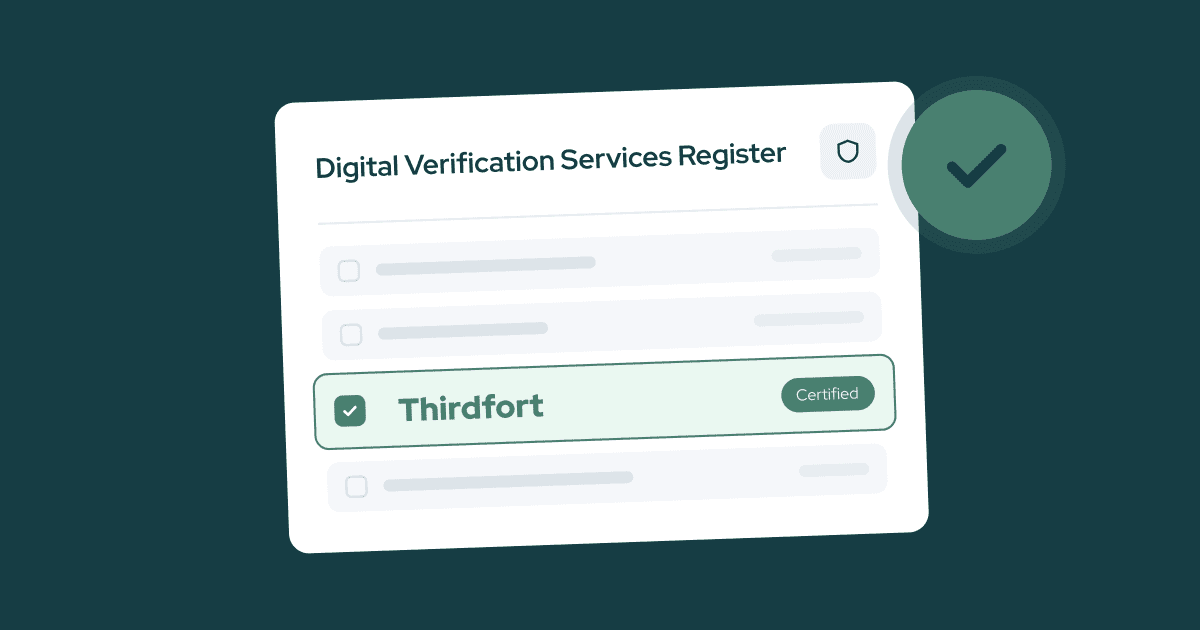
If you use a registered provider through another organisation, such as a referencing agency, that organisation must tell you which registered provider is carrying out the check. You can confirm any provider's status on the GOV.UK Digital Verification Services register. To see what an entry looks like, view Thirdfort's register entry.
Technology can do part, but judgement and responsibility don't disappear with it.
Myth 6: “If the digital check fails, the tenant has failed Right to Rent”
They haven't. A failed digital journey means the digital identity check couldn't be completed, not that the person has no Right to Rent.
A Digital Right to Rent check answers a very specific question: whether the prescribed digital identity check has been completed successfully.
If it can't be completed, the person may simply need to use another prescribed route.
For example, someone with an eVisa will normally need to prove their status through the Home Office online service using a share code. Someone else may need to complete a manual document check. Where someone can't use any of these routes, for example because they can't access their eVisa, you may be able to use the Home Office Landlord Checking Service.
This is an important distinction for landlords and agents.
An unsuccessful digital journey is not the same thing as an unsuccessful Right to Rent check.
The next step should be to identify the correct route for that individual, rather than treating the failed digital journey as the answer.
The common thread? Don't let familiarity create shortcuts
The October changes haven't turned Right to Rent into an entirely new regime.
But they have made the distinction between the different checking routes more important.
A Digital Right to Rent check isn't the same as a Home Office online check.
A successful DVSP result doesn't remove the landlord or agent's responsibilities.
An expired passport isn't automatically unusable.
And someone's nationality doesn't determine whether they need to be checked.
The safest approach isn't to memorise every technical rule.
It's to build a process that helps your team identify which route applies, what evidence is needed and what still needs to happen after the check is complete.
That's where good technology should help: not by adding another process for your team to learn, but by making the right route clearer and giving you the evidence you need when the check is complete.
Recommended reading
Want to dig into the rules in more detail? These are the key government sources behind the October 2026 changes.
Home Office: Landlord's guide to right to rent checks: 1 October 2026
The most practical starting point for landlords and letting agents. It explains the different checking routes, when each applies, what records you need to keep and how to establish a statutory excuse.
Home Office: Code of practice for landlords and their agents: 1 October 2026
The formal Code underpinning the Right to Rent scheme. Useful if you want more detail on statutory excuses, prescribed checks and the responsibilities of landlords and agents.
Supplementary code for Digital Right to Rent checks: version 1.1
The detailed rules for registered providers carrying out Digital Right to Rent checks, including eligible documents, identity verification requirements and the information that must be returned following a check.
GOV.UK Digital Verification Services register
Use the public register to check whether a provider is registered and whether its entry confirms that it can provide Right to Rent checks.
Digital Right to Rent FAQs
We're registered to provide Digital Right to Rent checks. View our GOV.UK register entry or find out more about our Digital Right to Rent check.
Right to Rent for letting agents
We're certified and registered for Digital Right to Rent checks.
Subscribe to our newsletter
Subscribe to our monthly newsletter for recaps and recordings of our webinars, invitations for upcoming events and curated industry news. We’ll also send our guide to Digital ID Verification as a welcome gift.
Our Privacy Policy sets out how the personal data collected from you will be processed by us.